Appearance
Cash Flow
Reports → Cash Flow. Profit and cash are not the same thing — a profitable month can still leave the bank emptier, because profit counts invoices issued, not money received. This statement reconciles the two: it starts from profit and walks, line by line, to what actually happened to the cash.
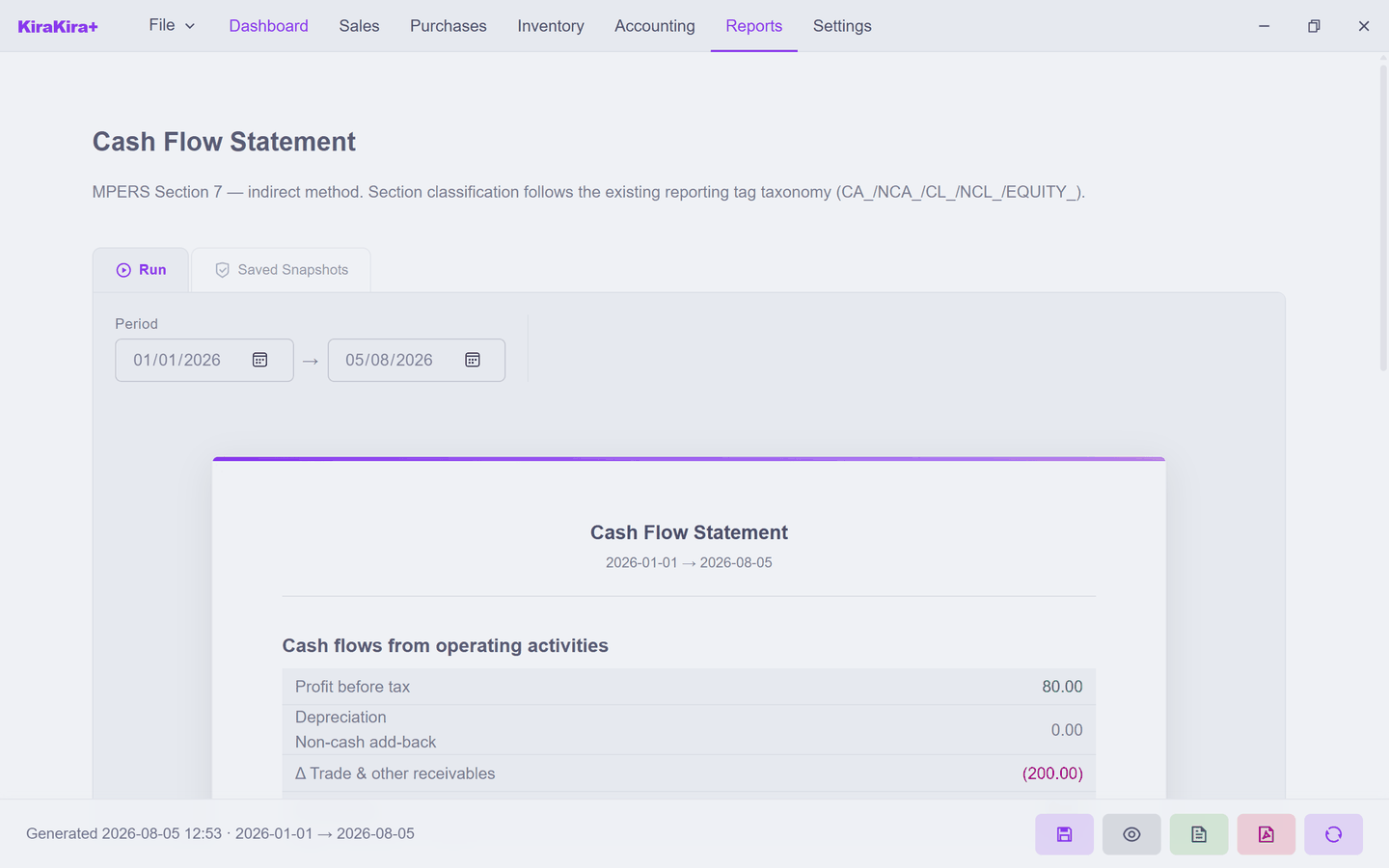
It reads in three sections, top to bottom:
- Operating activities — the day-to-day trade. It starts at Profit before tax and adjusts for things that were profit-on-paper only: Seri Maju's RM 200 sale is in profit but still unpaid, so Δ Trade & other receivables subtracts it back out; the RM 40 bill is a cost not yet paid, so payables add it back. The subtotal is the cash the trade itself produced (or consumed).
- Investing activities — buying and selling long-lived assets.
- Financing activities — money in and out of the business's funding. The owner's RM 5,000 capital injection lands here.
The bottom line ties to reality: the movement in cash for the period equals what the bank account actually did. For Seri Maju that is the 5,000 that arrived — trade produced profit, but no cash yet, and the statement says exactly that.
Pick any period with the Period control and it re-runs; Run always reads the live books, and Saved Snapshots keeps frozen copies (see Profit & Loss and Balance Sheet).
The format
MPERS Section 7, indirect method — the standard shape a Malaysian accountant expects.
Next: Who owes me / who I owe.